

Ehlers-Danlos and Hypermobility Disorder
Hypermobility Spectrum Disorders
Hypermobility joint syndrome is a hereditary disorder of the connective tissues (ligaments) that results in joints becoming loose throughout the body (hypermobility). Although some degree of hypermobility in children is normal, individuals with hypermobility may have persistent laxity (loose ligaments), resulting in long-term problems, such as pain and joint instability. Physical therapists help those with the syndrome develop strategies to increase joint stability, reduce pain, and improve function.
How Physical Therapy Helps
Physical therapists play a vital role in providing treatment strategies and activities that help people experiencing h-EDS improve their joint stability. I believe a strong manual therapy background grouped with an expert progression in strengthening is a large key to achieve and maintain functional progress in individuals with hypermobility disorders.
Treatments We Provide
Muscle Strengthening: Muscles also provide stability to joints. I take a unique approach to building strength. My main goal is to focus on a functional goal individual to each client and use a system that focuses on the co-activation of certain muscle groups to provide stability while taking into account the patient’s fitness level in order to reduce unnecessary fatigue. I am also knowledgeable of the Muldowney Protocol which is appropriate for certain individuals.
Balance and Proprioceptive Activities: Your physical therapist will work with you on treatment strategies to improve your balance and coordination.
Orthotics/Taping/Bracing: May be appropriate for hypermobile joints to prevent excessive trauma and injury. I use different techniques to help stabilize joints; taping (Kinesio, Rock, athletic taping), custom orthotics (superfeet, custom made EVA postings), finger splints (I recommend silver ring splints and will measure and order for each patient as appropriate), bracing ( if a joint is deemed too loose, to help make it less susceptible to further injury I may recommend a certain splint or brace).
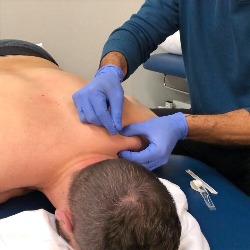
Manual Therapy: Because pain is a common complaint of people with this disorder, it is critical to obtain as much symmetry as is possible in the pelvis and upper cervical spine. To achieve this, I use muscle energy techniques and low-grade mobilizations for pain control. For muscle spasms, I recommend Dry Needling. TDN is very effective in resetting muscles and allows for the stability exercises to maintain the gains achieved via manual therapy.